
Hydrogen vehicles how do they work ?
Hydrogen fuel cell vehicles (FCEVs)
How Do Hydrogen Fuel Cell Vehicles Work? A Beginner’s Guide
- Explain the fuel cell stack, hydrogen storage, and power generation in simple terms.
- Address common misconceptions about hydrogen cars.
Understanding Hydrogen Cars
To fully appreciate the potential of hydrogen cars, it is essential to understand their technology and the different types available for various applications.
Technology
At the core of a hydrogen car is a fuel cell stack, which converts hydrogen gas into electricity through an electrochemical process. Here’s a simplified breakdown of how hydrogen cars operate:
- Hydrogen is stored in high-pressure tanks inside the vehicle.
- The hydrogen is fed into the fuel cell stack.
- Inside the fuel cell, hydrogen reacts with oxygen from the air, generating electricity and water vapor as the only byproduct.
- The electricity powers the motor, driving the wheels.
- Excess electricity is stored in a small battery for later use, such as during acceleration or climbing hills.
This process results in zero direct emissions, with only water vapor being released as exhaust. Additionally, fuel cells can achieve efficiency levels of up to 60%, significantly higher than conventional internal combustion engines.
Types of Hydrogen Cars
There are several types of hydrogen-powered vehicles, each suited for different use cases:
1. Fuel Cell Electric Vehicles (FCEVs)
FCEVs are the most common type of hydrogen-powered cars and are widely considered the most promising for large-scale adoption. These vehicles offer:
- Quick refueling times (comparable to gasoline or diesel vehicles).
- Long driving ranges, making them well-suited for long-distance travel.
- Heavy-duty applications, such as buses and trucks, which benefit from hydrogen’s high energy density and rapid refueling.
2. Hydrogen Internal Combustion Engine Vehicles (H2-ICEs)
Some manufacturers are developing modified internal combustion engines that run on hydrogen. While these vehicles produce some nitrogen oxide (NOx) emissions, they are significantly cleaner than traditional petrol and diesel engines. H2-ICEs could serve as a transitional technology, helping to bridge the gap between fossil fuels and full hydrogen adoption.
3. Hybrid Hydrogen-Electric Vehicles
These vehicles combine a hydrogen fuel cell with a battery-electric system, offering:
- The long range and quick refueling of hydrogen-powered vehicles.
- The efficiency and regenerative braking of battery-electric vehicles.
This hybrid configuration could be especially useful in areas where hydrogen infrastructure is still developing, providing a flexible solution in regions with limited hydrogen refueling stations.
Hydrogen Cars in the Future of Transportation
As the world moves towards cleaner and more sustainable mobility, understanding these different types of hydrogen vehicles is crucial. Each technology presents unique advantages and could play a key role in the transition to low-emission transportation, depending on infrastructure development, cost factors, and specific use cases.
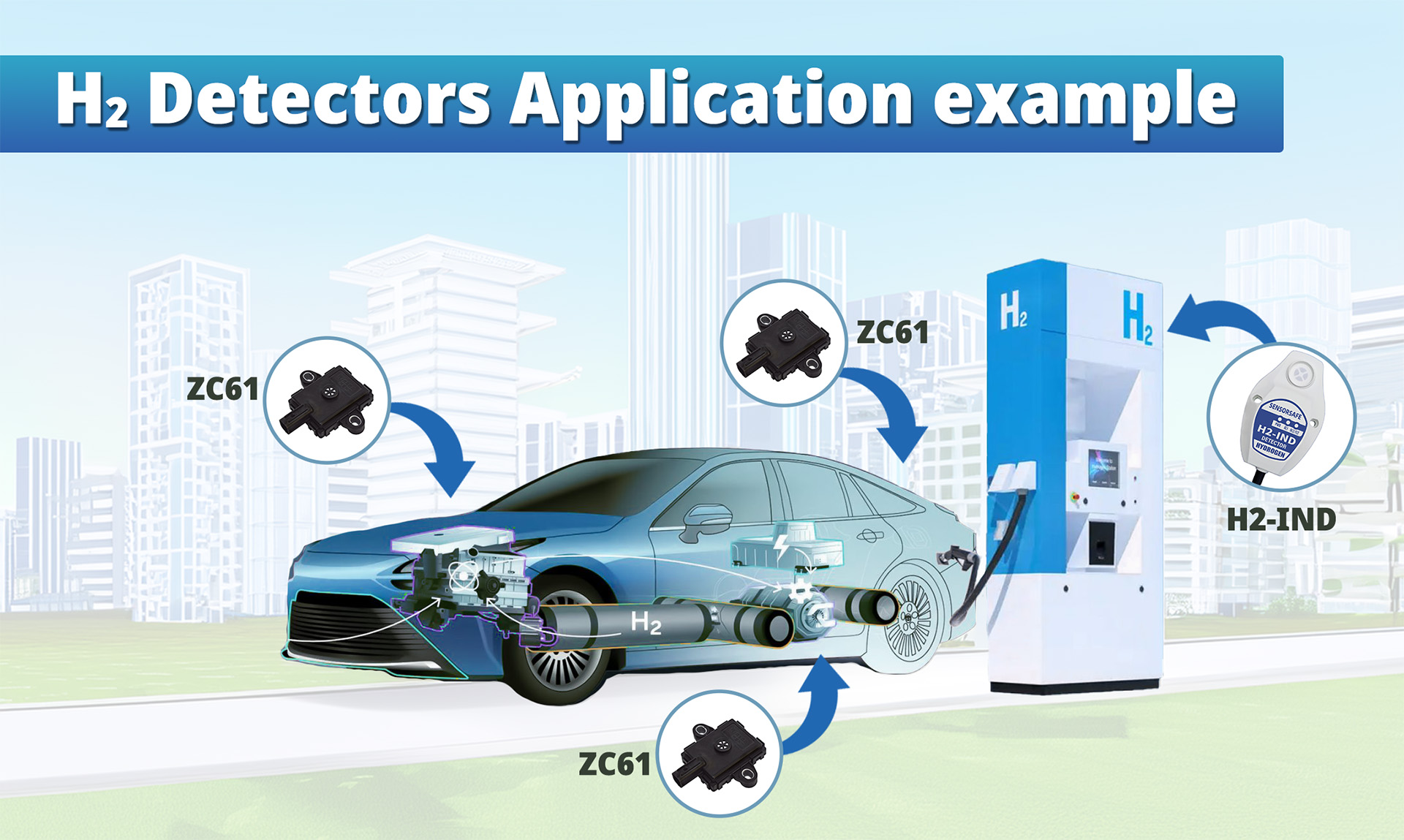
The safety of hydrogen vehicles can be ensured thanks to our ZC61 detectors, certified for automotive applications.
As hydrogen infrastructure expands, these technologies will play a crucial role in reducing carbon emissions and shaping the future of mobility.
🔋💨 Would you consider driving a hydrogen car?
